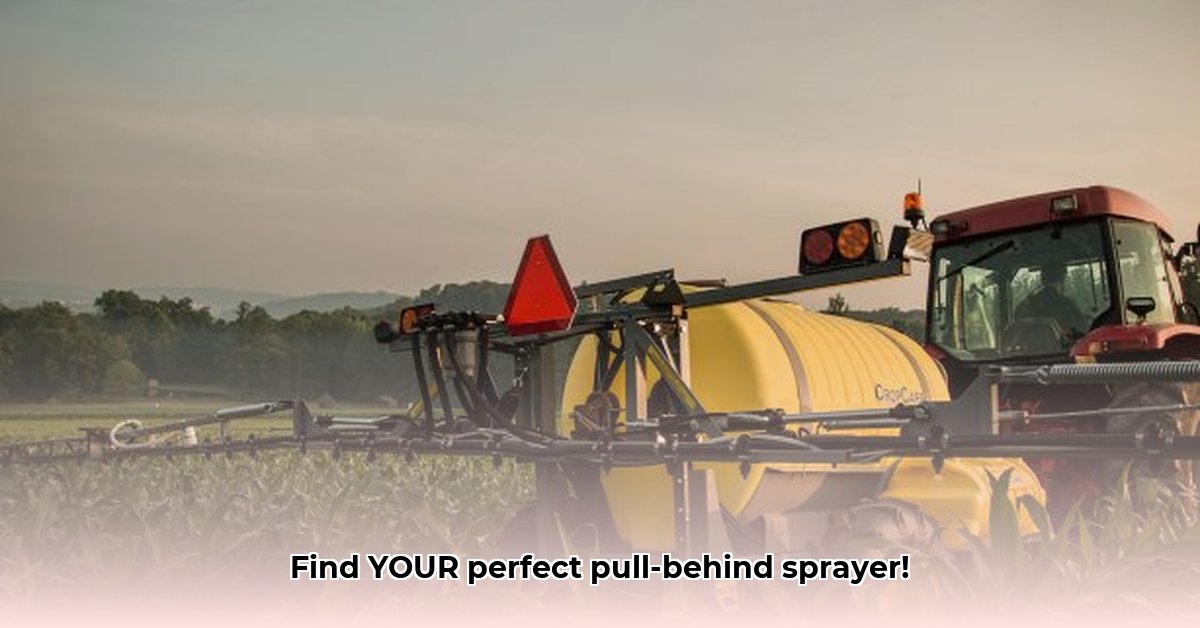
Choosing the right pull-behind sprayer is crucial for efficient and sustainable farming practices. This comprehensive guide helps you navigate the market, select the ideal sprayer for your needs, and understand essential maintenance and safety procedures. Whether you're a small-scale farmer or manage a large operation, this guide will empower you to make an informed decision. For more detailed information on choosing the right sprayer, check out this helpful resource: Learn More.
Sizing Up Your Needs: Acres, Application, and Terrain
Before selecting a sprayer, assess your farm's specific requirements. The size of your operation directly impacts the necessary tank capacity. A small garden might only need a 15-gallon sprayer, while large-scale farming demands 50-gallon or even larger capacities. Underestimating tank size leads to frequent refills, while overestimating results in unnecessary expense.
What chemicals will you be applying? Fertilizers, herbicides, pesticides, and simple water all have different requirements. Highly corrosive chemicals mandate compatibility with the sprayer's tank material; otherwise, leaks and damage can occur. Consider this crucial variable before purchasing a sprayer.
Terrain significantly influences sprayer selection. Uneven terrain demands superior stability, robust tires, and a design that minimizes the risk of tipping or spills. A stable sprayer is paramount to safe and efficient operation, regardless of the size of your operation.
Choosing Your Ideal Sprayer: A Step-by-Step Plan
Selecting the right sprayer involves a methodical approach. Follow these eight steps for a successful outcome.
Define Your Budget: Sprayers vary widely in price. Establishing a realistic budget helps narrow down options and prevents overspending.
Measure Your Acreage: Acreage directly correlates to tank capacity. Accurate measurement ensures you choose a sprayer large enough for your needs without unnecessary expense.
Identify Application Type: This determines tank material and nozzle requirements. Different chemicals demand specific sprayer features to prevent damage and enable efficient application.
Assess Terrain: The type of land your farm occupies influences sprayer design, tire type, and overall stability. Uneven terrain necessitates a rugged, stable design.
Explore Key Features: Many sprayers offer valuable features such as adjustable pressure settings for varied spray patterns, innovative systems like Chapin's Mixes on Exit, which reduces chemical waste and runoff and boosts efficiency, and durable pumps designed for the specific needs of the application.
Prioritize Quality: A higher-quality sprayer ensures longevity and minimizes maintenance costs. Durable materials, such as stainless steel for corrosion resistance, are essential for long-term use.
Research Reputable Brands: Ironton, Chapin, and Workhorse are reputable manufacturers, each offering diverse models with various features to accommodate differing needs and budgets. Research and compare before making your purchasing decision.
Confirm Regulatory Compliance: Pesticide application regulations vary by region. Familiarize yourself with local and national laws before purchasing and using your sprayer. This ensures legal operation and responsible environmental stewardship.
Sprayer Types and Features: A Quick Comparison
Sprayer types cater to different farm sizes and operational needs.
| Feature | Small-Scale (e.g., Ironton) | Large-Scale (e.g., Workhorse) | Key Considerations |
|---|---|---|---|
| Tank Capacity | 15-30 gallons | 40-80 gallons or more | Directly related to acreage; larger tanks reduce refills |
| Spray Type | Broadcast, Spot | Broadcast, Spot, Variable Rate | Application method depends on crops and chemical type |
| Nozzle System | Simple, adjustable | Adjustable, Variable Rate | Precision application is critical for efficiency |
| Mixes on Exit | May or may not be included | Often included | Minimizes waste and promotes sustainability |
| Pump Type | Often 12V DC | More powerful options available | Matches your tractor's power and application needs |
Sustainability and Responsible Spraying
Sustainable farming practices include minimizing chemical runoff and maximizing application efficiency. Features like Chapin's Mixes on Exit system significantly reduce chemical waste and improve environmental responsibility. Employing proper application techniques is just as vital as the sprayer itself. Always follow manufacturer instructions and adhere to local regulations for safe and sustainable use.
Maintenance and Safety: Keeping Your Sprayer in Top Shape
Regular maintenance is essential for sprayer longevity and safe operation. Thoroughly clean the equipment after each use, inspect hoses and booms, and promptly replace damaged parts. Always wear appropriate safety gear, including gloves, goggles, and a respirator. Proper chemical handling and storage are paramount to operator safety and environmental protection.
Product Examples: A Brief Overview
Several manufacturers offer various models. Ironton, Chapin, and Workhorse are notable examples, but many other options exist. The choice of sprayer depends entirely on individual farm needs and budget constraints.
| Brand | Capacity (Gallons) | Key Features | Price Range ($) |
|---|---|---|---|
| Ironton | 15-50 | Basic, straightforward design | 100-300 |
| Chapin | 15-100 | Mixes on Exit system; nozzle versatility | 150-500 |
| Workhorse | 25-200 | Heavy-duty construction; powerful pump | 200-800 |
This guide provides a comprehensive overview, enabling you to choose the optimal pull-behind sprayer for your farming operation. Remember to prioritize safety, efficiency, and environmental responsibility in your selection process.